

Why Most AI Blogs Fail (And How Smart D2C Founders Build Authority Anyway)
TL;DR — For Busy Founders
Most AI blog writing is invisible because it repeats what already exists. Google’s algorithm and your readers are both getting better at detecting it. The fix isn’t less AI — it’s using AI as a research engine, not a content engine. The founders winning in 2026 are injecting real experience, contrarian insight, and proof into AI-built structures. That combination is what gets cited, trusted, and remembered. If you’re building this seriously, explore our content strategy for D2C brands.
Table of Contents
The AI Content Trap: Why “Good” Blogs Are Now Invisible
Here’s a number that should stop you mid-scroll: organic click-through rates on informational queries dropped by 61% after Google rolled out AI Overviews at scale. Not because the content got worse. Because the supply of decent content became infinite overnight.
When every D2C founder in the supplements, skincare, and apparel space is using the same three AI tools to write blogs about “the benefits of adaptogens” or “how to reduce cart abandonment,” the content doesn’t compete — it collapses into one indistinguishable pile. Google doesn’t need to send traffic to your post about ashwagandha when it can summarise the same information in a two-sentence AI snippet and call it done.
The trap isn’t that AI content is bad. It’s that good AI content is now commodity. It’s competent. It’s structured. It hits the keyword. And it gets completely ignored because it’s safe — a “safe answer” rather than a source worth citing.
This is exactly why most brands struggle with why most blogs don’t convert — the content is technically correct but strategically invisible.
The brands still getting organic traction aren’t the ones publishing more. They’re the ones publishing differently. And that distinction is the entire point of this post.
The Trust Shift: From SEO Optimisation to Information Gain
The human-centric SEO strategy that actually works right now isn’t about tweaking meta titles or hitting a keyword density. It’s about a concept Google has quietly baked into its Helpful Content signals: information gain.
What “Information Gain” Actually Means
Information gain does not mean writing longer blogs. It means writing blogs that add something new to the conversation. Google is increasingly scoring content against the delta between your post and the top ten results already ranking. If your blog on “best protein powders for women” says the same things as the nine posts above it, you don’t rank — you just add to the noise.
The founders getting editorial traction in 2026 are asking a different question before they write anything: “What does this post say that nothing else currently says?” That’s information gain. It’s not a content hack. It’s a thinking discipline.
E-E-A-T Is Now Binary
Google’s quality raters don’t grade on a curve anymore. The Experience, Expertise, Authoritativeness, and Trust framework has become binary in practice: you either have proof of lived experience or you don’t.
A skincare founder who documents their own skin barrier repair journey with before-and-after photos and specific product failures has E-E-A-T. A blog that says “many people struggle with dry skin and here are five tips” does not — regardless of how well it’s structured. This is also where inconsistent branding quietly kills trust — when your content, visuals, and positioning don’t align, authority breaks before it compounds.
Proof of effort signals that actually move the needle right now:
- Case studies with real numbers (even small ones)
- Founder POV sections that take a clear, attributable position
- Original data — even a simple customer survey published as a finding
The uncomfortable reality for most D2C brands is that none of this can be automated away. That’s not a problem. That’s the opportunity.
The Real Risk: AI Is Training You to Sound Like Everyone Else
This is the part most AI content guides skip, and it’s the most important section in this entire post.
Algorithmic Inbreeding Explained
Large language models are trained on consensus. They scrape the web, identify patterns, and reflect the dominant perspective back at you in polished form. Which means when you ask an AI to write a hot take about “why D2C brands are failing at retention,” you don’t get a hot take. You get the most statistically common version of a hot take, cleaned up and confident.
I’d put it this way: unpopular opinions written by AI are just popular opinions refined. The friction, the edge, the specific friction point that makes someone stop scrolling — that gets sanded away in the generation process.
Why This Kills Founder Authority
If your blog sounds like everyone else’s blog, there’s no reason for anyone to follow you specifically. In a category like D2C wellness or fashion, where ten new Shopify brands launch every week, your content is either a reason to trust your brand — or evidence that you’re one of the ten.
The AI content trust vacuum is real: consumers are getting better at detecting generated content, not because they can spot the technical tells, but because nothing in it surprises them. There’s no friction. No unexpected observation. No voice they’d recognise again.
That’s not a content strategy problem. That’s a founder authority problem in disguise.
Reframing AI: From Writer to Strategic Research Assistant
Strategy-led AI content for D2C brands starts with one reframe: AI is your research engine, not your content engine.
The Correct Workflow
The workflow I use — and the one I’ve helped several small D2C founders implement — has three steps, in order:
- Map the status quo with AI. Use it to summarise what the top-ranking content says. What are the talking points? What’s the framing? What’s missing?
- Identify saturation points. Where are four out of five articles saying the same thing? That’s where the opportunity is — not to say it better, but to say something else.
- Inject your contrarian or experiential insight. This is the only part only you can do. Use the AI-built structure as scaffolding. Fill it with your actual knowledge.
The “Opposite Thinking” Framework
Before writing a single word, run your topic through three questions:
- What is everyone saying? (AI will tell you in thirty seconds)
- What is missing from that conversation? (This requires reading between the lines)
- What do I know from experience that contradicts the consensus? (This is your content)
The third question is non-negotiable. If you can’t answer it, you’re not ready to write the blog yet. Go back and do more thinking.
The Authority Framework: Foundation + Friction Model
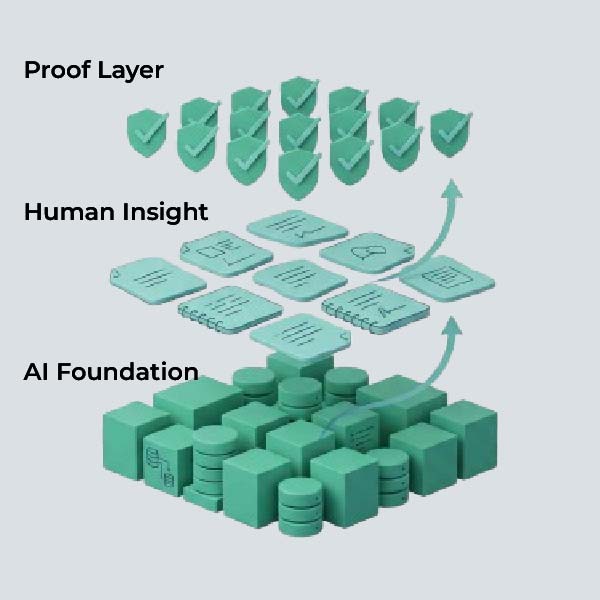
Step 1 — AI Foundation
Use AI to build the skeleton: structure, H2 flow, baseline definitions, and logical sequencing. This is genuinely what AI is good at. It can map a 1,500-word blog in four minutes in a way that’s coherent and SEO-sensible. Let it do that.
Step 2 — Human Friction (The Critical Layer)
This is what separates a blog from a brochure. Human friction isn’t sloppiness — it’s deliberate imperfection that signals a real person wrote this. It’s the moment where you say “This worked for us but probably won’t work if you’re selling a high-consideration product above ₹3,000” — a qualifier that an AI would never add because it sounds restrictive.
It’s behind-the-scenes insights, the specific details that narrow your audience down to people who actually care, and the experiences that can’t be generalised into a listicle.
Step 3 — The Proof Layer
End with evidence. Not case study theatre — actual specifics. A screenshot of a campaign result. A metric you tested and what happened. A product decision you made and why. Numbers make you citable. Specifics make you trustworthy. And a 2026 AI Overview cites sources, not summaries — which means the proof layer isn’t just good practice, it’s your distribution strategy.
Case Study Breakdown: What Works vs What Fails
Success — “Luna & Sage” (D2C Skincare, Mumbai)
Luna & Sage is a small-batch skincare brand that pivoted their content approach mid-2024. Instead of publishing five polished AI blogs a week, they dropped to two — but each one included a founder note section where the founder documented her personal experience with the ingredient or product in question. Photos from her kitchen. Real numbers from their formulation costs. Observations from customer conversations.
The result: content production costs dropped by roughly 80%. Engagement — comments, saves, and direct messages from content — increased sharply. More importantly, two of their posts were picked up as sources by larger wellness publishers. That’s the outcome that compounding authority looks like.
Failure — “GenericWellness Co.” (D2C Supplements, Tier 1 India)
This brand ran fully automated blogs for eight months — well-structured, keyword-targeted, posted three times a week. No founder voice. No original data. No position on anything. The content was competent and interchangeable.
When Google’s Helpful Content updates consolidated rankings in their category, they lost significant positions to a creator who published monthly, had worse SEO optimisation, but had documented her own supplement testing protocol with bloodwork panels. She had E-E-A-T. They had volume.
The lesson: trust signals outlast traffic tricks.
The New Content Rule: Fewer Blogs, Higher Signal
| Generic AI Blog | Authority-Driven Blog |
|---|---|
| Optimised for keywords | Optimised for insight |
| Polished | Opinionated |
| Repeats existing information | Adds new perspective |
| High volume | High signal |
| Indexed and ignored | Read and cited |
Why Volume Is Dead
The publishing cadence of three to five blogs per week made sense when content supply was scarce and your competition was one or two competitors who updated quarterly. AI made content supply infinite. The cost of publishing dropped to almost zero. Which means volume is no longer a competitive advantage — it’s just noise at scale.
D2C brand authority in 2026 is not built by filling a content calendar. It’s built by making every published post worth someone’s time.
What Replaces Volume
Three things:
- Opinion density — how many clear, attributable positions does your content take?
- Insight depth — how far below the surface does each post go?
- Experience signals — how much of this could only have been written by someone who’s actually done it?
These don’t need a large team or a large budget. They need a founder willing to think out loud in public.
Tactical Playbook: How to Write a High-Trust AI Blog
Conversion-driven AI copywriting is not a template game. But here’s the checklist I run through before publishing anything for a client or for Izwiq Digital:
Build it right:
- Start with a non-obvious question (if a search engine can answer your opening question, start over)
- Use AI to summarise what the top 10 results say on your topic
- Identify the one claim in those results you genuinely disagree with — that’s your angle
- Add at least one personal contradiction (“This is what I expected. Here’s what actually happened.”)
- Add one real example with a specific number attached
- Add one observation that narrows your audience (“If you’re scaling past ₹50L/month, this part doesn’t apply to you.”)
Cut these every time:
- Generic intros that explain what the blog is about (readers know — they clicked)
- Over-explained basics your audience already knows cold
- Transition phrases that exist only to connect paragraphs, not to add meaning
- Any sentence that could have been written about any brand in any category
If a sentence passes that last test, it shouldn’t be in the post.
One note on AI agents and 2026: The way content gets surfaced is shifting. AI agents browsing the web on behalf of users — pulling answers, summarising sources, making recommendations — don’t scroll and skim the way humans do. They index for specificity, authority signals, and citability. A blog that’s vague and comprehensive gets skipped. A blog with a clear position and documented evidence gets referenced. Writing for AI agents, paradoxically, means writing more humanly — with opinions, numbers, and named experiences.
The Endgame: Becoming the Source AI Can’t Replace
D2C founder thought leadership in 2026 has a single measurable goal: be cited, not just indexed.
AI Overviews, Perplexity, ChatGPT with Browse — all of these systems cite sources. They pull from posts that have a clear position, original data, and specificity that can be attributed. A summary of what everyone already knows doesn’t get cited. A specific claim backed by real experience does.
The goal isn’t to beat the algorithm at its own game. The goal is to become a source the algorithm can’t replicate — because what you know, what you’ve done, and how you see your category is yours. No model trained on consensus can reproduce that.
Build a unique POV. Develop a recognisable thinking style. Publish less. Mean more.
That’s the content strategy that compounds.
If you’re thinking about this in the context of your overall brand consistency, why inconsistent branding is hurting your content strategy is a good place to connect the dots — because authority doesn’t survive visual incoherence, no matter how strong the writing is.
And if you’re wondering where to start practically, our content strategy service for D2C brands is built around exactly this framework.
If your content looks good but doesn’t convert, the breakdown is in the system.
We build trust-first content systems for D2C brands that drive real conversions.
FAQ
Is AI content bad for SEO in 2026?
AI content isn’t inherently bad for SEO — but undifferentiated AI content is. Google’s Helpful Content systems are designed to reward information gain and E-E-A-T signals, not penalise tools. The issue is that most AI content lacks original perspective, lived experience, and proof layers. Fix the content strategy, not the tool.
How many blogs should a D2C brand publish per month?
There’s no universal answer, but the trend is clearly toward quality over volume. Two to four high-signal posts per month, each with a clear founder POV and original data point, will outperform twelve generic posts in trust-building and long-term authority. If you can’t add something new, don’t publish yet.
What does “information gain” mean for a small D2C brand?
It means your post adds something to the conversation that the existing top-ranked content doesn’t. This doesn’t require a research team — it can be a customer insight, a product test result, a behind-the-scenes process observation, or a counterintuitive position you can defend. The bar is “new perspective,” not “new data.”
How do I make AI-generated blog content sound more human?
The Foundation + Friction Model is the practical answer: let AI build the structure, then layer in imperfection — specific experiences, qualified claims, real numbers, and a clear position on at least one debatable point. Remove every sentence that could have been written about any brand in any category. What remains is your voice.
About the Author
Muhammed W is a content strategist at Izwiq Digital, working directly with small business, D2C and e-commerce brands on SEO content, social media systems, and conversion-focused design.
The insights shared here are based on hands-on client work across health, beauty, SaaS, and B2B — focused on improving engagement, trust, and conversion metrics. Learn more about our services