
Health Supplement Email Campaign 3 Case Study
How an Education-First Health Supplement Email Marketing Strategy Turned Skeptical Readers into High-Intent Buyers
Scope:
Health Supplement Email Marketing Strategy & Conversion Email Copywriting
Industry:
Health Supplements / Nutraceuticals / Preventative Wellness
What Was Delivered:
Education-First Health Supplement Email Marketing Campaign
(3-Email Nurture Sequence)
Strategic Overview
A 3-email nurture sequence written for a premium eye health supplement targeting urban Indian professionals with chronic screen-related eye strain.
The sequence moves readers from passive awareness to active purchase—without a single moment of hard selling. Every email earns trust before it asks for anything.
The Problem: Why Health Supplement Emails Fail
Supplement buyers are among the most skeptical buyers in e-commerce. They’ve been burned before.
- They’ve tried the eye drops. They didn’t last.
- They’ve read the “clinically proven” claims. They didn’t believe them.
- They’ve seen the Amazon reviews. They didn’t trust them.
The gap isn’t awareness. It’s credibility.
Generic email campaigns lead with benefits and close with urgency. For this audience, that approach triggers immediate dismissal. The copy had to take a different path: validate the frustration first, expose the industry gap second, and introduce the product only after trust was already built.
The Strategy: Four Pillars Behind the Sequence
Emotional Bond Architecture
Email 1 opens with the founder’s personal story—not a sales pitch. His brother’s experience of suffering despite “normal” eye check-ups validates exactly what this audience feels but can’t explain.
No product mention in
Email 1. The entire email earns psychological buy-in.
Authority Through Industry Truth-Telling
Email 2 disrupts conventional wisdom by exposing what surface solutions—eye drops, screen filters, the 20-20-20 rule—cannot fix.
This builds authority through transparency.
The brand positions itself as an honest educator, not another supplement seller.
Social Proof Through Relatable Journey
Email 3 features Kunal—a strategy consultant in Bangalore with normal check-ups and constant strain. His story is deliberately undramatic: no miracle, no transformation. Just a shift from resignation to control.
Realistic outcomes convert skeptical buyers better than exaggerated ones.
Graduated Conversion Pressure
The sequence follows a deliberate arc:
Email 1: Zero product mention. Pure emotional validation.
Email 2: Light product introduction. Focus on clinical differentiation.
Email 3: Full pitch—with a 60-day guarantee and zero-pressure framing.
Trust is built in full before the ask is made.
The Execution: Full Email Sequence
Email 1: The Emotional Bond
Subject: Your eyes aren’t failing. They’re aging.
Preview: What doctors can’t treat yet—and why that matters now.
Strategic Intent: Establish founder credibility and validate the reader’s frustration before any product mention. Create psychological buy-in through shared pain.
Hi [First Name],
I’m [Founder Name], and I need to tell you something no one else will.
Two years ago, I was sitting in my office in Mumbai, watching my younger brother—a 31-year-old software developer—rub his eyes for the third time in an hour.
His eye check-up was normal. 6/6 vision. Healthy retinas. No disease.
But he was miserable. His eyes burned every evening. He dreaded opening his laptop after lunch. And he felt like he was going crazy because every doctor said he was fine.
That’s when it hit me:
Medicine treats diagnosed disease—not damage in progress.
By the time any test can measure retinal aging, years of oxidative stress have already built up. The strain you feel at 5 PM? That’s not in your head. It’s your retina working overtime in an environment it wasn’t designed for.
And the worst part? You can’t opt out. Your career depends on screens. Your growth depends on screens. So you try everything—eye drops, anti-glare glasses, screen breaks—and still, the burning comes back.
That gap haunted me.
The solutions available address comfort—not protection. They treat the surface, not what’s happening deep inside the retina. They wait for symptoms to show up on tests, instead of preventing damage during the years that actually matter.
So I did what any frustrated entrepreneur would do.
I spent 14 months working with formulators and research papers to build something different. Something that worked before the damage became measurable.

Tomorrow, I’m going to tell you the industry secret nobody wants you to know—the one that explains why “relief” keeps failing you.
It’s uncomfortable. But it’s necessary.
Talk soon,
[Founder Name]
Founder, [BRAND NAME]
P.S. If you’ve ever wondered why your eyes feel worse despite trying everything, you’re not alone. And you’re definitely not wrong.
Strategic Logic — Email 1
- Shared struggle before solution: No product appears in this email. The entire focus is validating the reader’s experience—building the psychological receptivity that Email 2 will activate.
- Reframing the problem: “Medicine treats diagnosed disease—not damage in progress” shifts blame away from the reader and reframes their frustration as an industry gap, not a personal failure.
- Open loop tension: The email ends with a cliffhanger that drives Email 2 opens—“the industry secret nobody wants you to know.”
Email 2: Authority & Education
Subject: Relief isn’t protection.
Preview: The part of your eye no drops can reach.
Strategic Intent: Expose the limitations of mainstream eye care and establish the brand as an authority willing to tell uncomfortable truths. Position the product as clinically-designed, not marketing-designed.
[First Name],
Let me be honest with you.
Eye drops are the biggest lie in modern eye care.

Not because they don’t work—they do, for maybe 15-20 minutes. But because they’ve convinced an entire generation of IT professionals, traders, and entrepreneurs that surface moisture equals eye health.
It doesn’t.
Here’s what’s actually happening while you’re reaching for that third bottle of Refresh Tears:
Your retina—the light-sensitive tissue at the back of your eye—is getting hit with high-energy blue light for 10–14 hours a day. That exposure creates oxidative stress. Think of it like rust forming inside a machine.
And here’s the part that made me angry enough to start this company:
No drop, no screen filter, no 20-20-20 rule can touch that process.
Because the damage isn’t on the surface. It’s happening inside the retina, where blood circulation is limited and your body’s natural antioxidants run out faster than they can be replaced.
The industry knows this. But they keep selling surface solutions because that’s what’s easy to manufacture and market.
The Loophole No One Talks About
Most “eye health” supplements in India:
- Use minimal doses just to print claims on the label (10mg lutein when research uses 20mg)
- Focus on vision clarity, not retinal aging
- Are designed to look good on Amazon, not to work at clinical levels
I built [PRODUCT NAME] the opposite way.
Three principles I refused to compromise on:
- Clinical-dose integrity — We match international research standards, not local price wars
- Retinal-first design — Lutein, zeaxanthin, astaxanthin, and omega-3s target oxidative stress where it starts
- Outcome-driven formulation — Every ingredient is dosed to support macular pigment density and retinal blood flow
This isn’t relief. It’s pre-damage defense.
The kind of protection that works before your next eye check-up shows a problem.
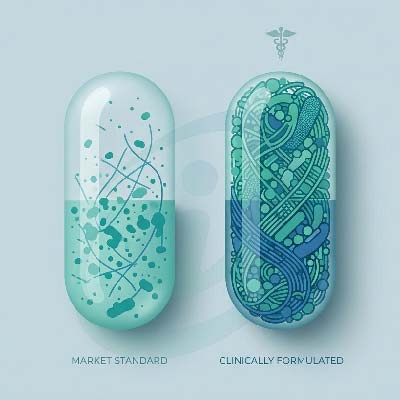
Tomorrow, I’ll tell you about Kunal—a Bangalore-based consultant who stopped waiting for his eyes to get worse.
— [Founder Name]
P.S. Want to see exactly what goes into each capsule and why? [LINK: Full Ingredient Breakdown]. We hide nothing because we have nothing to hide.Hi [First Name],
Strategic Logic — Email 2
- Bold industry critique: “Eye drops are the biggest lie in modern eye care” is provocative—but earned by the education that follows. Truth-telling positions the brand as an ally, not a vendor.
- Visual education: The diagram and “rust inside a machine” metaphor make cellular damage tangible without losing scientific credibility.
- Ingredient transparency as competitive advantage: Explicitly comparing market-standard dosing to clinical dosing turns honesty into differentiation.
- Cliffhanger to Email 3: Kunal’s story preview creates another open loop, driving the final conversion email’s open rate.
Email 3: Conversion & Logic
Subject: Kunal didn’t fix his eyes. He protected them.
Preview: Why prevention finally felt real.
Strategic Intent: Use a relatable customer journey to demonstrate realistic outcomes. Introduce the product ritual as an identity shift. Drive purchase with a 60-day guarantee and zero-pressure framing.
[First Name],
Kunal is a 33-year-old strategy consultant in Bangalore.
Normal eye check-ups. Constant strain. A job that kept him on client calls and Excel sheets until 10 PM most nights.
He tried everything: computer glasses from Lenskart, Ayurvedic eye drops, forcing himself to take breaks. Nothing lasted. The burning always returned by evening.
Here’s what changed:
He stopped trying to fix his eyes. And started protecting them.
The 3-Minute Shutdown Ritual
Every night, before shutting his laptop, Kunal takes [PRODUCT NAME].
Not as medicine. As a boundary.
A signal to his body: “Work is done. Now we protect.”
No miracle story. No dramatic transformation.
Just consistency. And control.
Two months in, Kunal sent me a message I keep coming back to:

“For the first time, I feel like I’m not just accepting this as part of being in tech.”
That shift—from resignation to control—is everything.
Why It Works for Indian Professionals
[PRODUCT NAME] delivers research-backed doses of:
- Lutein & Zeaxanthin (20mg/4mg) — Filter blue light at the retinal level
- Astaxanthin (12mg) — Cross into the retina to reduce oxidative damage
- Omega-3s (EPA/DHA) — Support retinal circulation and natural tear production
It’s not a replacement for breaks or screen hygiene. It’s the layer of internal protection those habits can’t provide—inside the retina, where aging actually starts.
Start Your Shutdown Ritual — 60-Day Money-Back Promise
Our Guarantee
If after 60 days of consistent use, you don’t feel a difference in how your eyes handle long screen days, we’ll refund every rupee—no questions asked, no forms to fill.
We’re not selling temporary relief. We’re offering a daily ritual that makes prevention feel real.
You can’t quit screens.
But you can stop letting them age your eyes without a fight.
— [Founder Name]
Founder, [BRAND NAME]
P.S. Not sure if [PRODUCT NAME] fits your situation? Take our [LINK: 2-Minute Eye Health Assessment] to see if retinal support could help your specific screen habits.
Strategic Logic — Email 2
- Bold industry critique: “Eye drops are the biggest lie in modern eye care” is provocative—but earned by the education that follows. Truth-telling positions the brand as an ally, not a vendor.
- Visual education: The diagram and “rust inside a machine” metaphor make cellular damage tangible without losing scientific credibility.
- Ingredient transparency as competitive advantage: Explicitly comparing market-standard dosing to clinical dosing turns honesty into differentiation.
- Cliffhanger to Email 3: Kunal’s story preview creates another open loop, driving the final conversion email’s open rate.
Why This Works: The Conversion Mechanics Behind the Sequence
Psychological Triggers Applied
| Trigger | How It’s Used |
|---|---|
| Validation Before Pitch | Email 1 contains zero product mention. The founder’s story earns emotional buy-in before any claim is made |
| Reframing Failure | “Medicine treats diagnosed disease—not damage in progress” shifts the reader’s self-blame to an industry gap—creating openness to a new solution |
| Industry Truth-Telling | Email 2 names what competitors won’t say. Trust built through honesty outlasts trust built through claims |
| Identity Shift | The “Shutdown Ritual” framing positions supplementation as a professional boundary, not a health product. Compliance follows identity |
| Realistic Social Proof | Kunal’s story is undramatic by design. No miracle language. This specificity makes the outcome feel achievable, not aspirational |
| Risk Reversal | The 60-day guarantee removes the final objection. “No questions asked, no forms to fill” closes the last gap between interest and purchase |
Conversion Principles Applied
- Graduated pressure: Each email increases conversion intent—from zero product mention (Email 1) to clinical education (Email 2) to full CTA with guarantee (Email 3). No email asks for more than the reader is ready to give.
- Open loop engineering: Emails 1 and 2 both end with a narrative cliffhanger. This drives open rates for the next email and keeps the sequence feeling like a story—not a sales funnel.
- Zero AI-isms: “Transform your digital lifestyle” → replaced with “Start Your Shutdown Ritual.” Every phrase is concrete, specific, and grounded in the reader’s actual experience.
- Zero hype language: “Cutting-edge breakthrough” → replaced with “research-backed doses” with exact mg figures. Specificity earns credibility where enthusiasm loses it.
Content Architecture
| Focus | Product Mention | |
|---|---|---|
| Email 1 | Emotional validation + problem reframing | None |
| Email 2 | Industry education + clinical differentiation | Light introduction |
| Email 3 | Customer journey + conversion with guarantee | Full pitch |
This graduated arc respects the reader’s skepticism—building trust across three touchpoints before asking for the sale.
Key Takeaways
- Email 1 should earn trust, not introduce the product. Founder-led storytelling that validates the reader’s frustration creates the psychological receptivity that makes Emails 2 and 3 work.
- Industry truth-telling is a positioning strategy. Naming what competitors won’t say builds authority faster than any claim about your own product can.
- Realistic social proof outperforms dramatic testimonials for skeptical health-conscious buyers. “I feel like I’m not just accepting this” is more believable than “My vision improved overnight.”
- Ritual framing increases compliance. A “Shutdown Ritual” is something people do because of who they are. A “daily supplement” is something they remember to take. One drives habit; the other drives drop-off.
- Graduated conversion pressure is a feature, not a compromise. Three emails, three levels of ask—matching the reader’s readiness at each stage.
- The guarantee is copy, not policy. “No questions asked, no forms to fill” removes a specific fear. Vague guarantees don’t convert. Specific ones do.
FAQ
Why doesn’t Email 1 mention the product at all?
Because the reader doesn’t trust the brand yet. A product mention in Email 1 triggers the “they’re just selling me something” reaction that kills the rest of the sequence. Email 1’s only job is to make the reader feel understood.
How does this sequence handle objections without feeling defensive?
By addressing them before they surface. Email 2 answers “why didn’t my previous supplements work?” through industry education—not a direct rebuttal. The reader reaches the conclusion themselves.
Is “ritual framing” just a branding technique?
It’s also a compliance driver. Supplements fail because people stop taking them. Identity-linked habits have higher adherence. The “Shutdown Ritual” framing makes the supplement feel like a professional boundary—something this persona is motivated to maintain.
Can this sequence work for other supplement categories?
Yes—the architecture transfers to any supplement sold to skeptical, health-aware buyers: gut health, sleep, immunity, joints. The specifics change; the structure holds.
What makes the Kunal story more credible than a standard testimonial?
It’s undramatic by design. “No miracle story. No dramatic transformation” signals to the reader that this brand won’t exaggerate—which paradoxically makes them more likely to believe the modest outcome being described.
Writing Email Sequences for Health Brands That Can’t Afford to Lose Trust?
This case study is for D2C supplement brands, nutraceutical companies, and health e-commerce teams where credibility is the conversion bottleneck—not traffic, not pricing, not the product itself.
If Your Email Sequence Isn’t Converting,
It’s a Trust Problem—Not a Traffic Problem
If your email sequence leads with benefits before earning trust—or relies on urgency your audience ignores—this is the strategic approach that fixes it.
Izwiq Digital works with e-commerce and D2C brands on content that earns the click and closes the sale.