
Beauty Cosmetics Blog Content Case Study
How Strategic Beauty Cosmetics Blog Content Built Trust and Guided Readers to Conversion
Scope:
SEO-Optimized Educational Blog Writing for Beauty & Cosmetics Brand
Industry:
SEO-Optimized Educational Blog Writing for Beauty & Cosmetics Brand
What Was Delivered:
Long-Form Beauty Cosmetics Blog Content (1 SEO Blog Post)
Strategic Overview
An authority-building blog post written for Luminelle Beauty’s Radiance Renewal Vitamin C Serum — exposing why most vitamin C products fail and positioning the brand’s 15% L-Ascorbic Acid formulation as the evidence-based alternative.
The strategy: tell the uncomfortable truth the industry avoids, and let the education do the selling.
The Problem: Why Vitamin C Content Doesn’t Build Credibility
The skincare blog space is saturated with “10 reasons vitamin C is amazing” content. It’s forgettable — and educated buyers know it.
Ingredient-conscious skincare consumers (25–45) have a specific problem with this category:
- They’ve bought serums that didn’t work. They’re skeptical of every “clinically proven” claim.
- They can’t evaluate labels. Most can’t tell L-Ascorbic Acid from Sodium Ascorbyl Phosphate — or why it matters.
- They’ve been burned by influencer recommendations that prioritised aesthetics over chemistry.
Generic educational content validates the ingredient. This blog needed to validate the reader’s frustration and rebuild their ability to choose.
The target outcome was not just brand authority — it was reader empowerment. Because readers who can evaluate products independently trust the brand that taught them how.
The Strategy:
Four Pillars That Drove the Rewrites
Industry Truth-Telling as the Authority Mechanism
The post opens with a bold claim: “Most vitamin C serums are a scam.”
This isn’t clickbait. It’s a position. By revealing that most products use cheaper, less effective derivatives instead of pure L-Ascorbic Acid, the brand positions itself as willing to say what competitors won’t.
Trust built through transparency outlasts trust built through claims, a shift supported by global research on trust in advertising.
Science Translation Without Condescension
Complex chemistry — pH requirements, enzymatic conversion, tyrosinase inhibition — is translated through relatable metaphor without losing accuracy.
“Getting paid in Monopoly money and hoping the bank will exchange it for real cash” explains derivative conversion in one sentence. No chemistry degree required.
Respecting reader intelligence while making science accessible is the difference between authority content and a Wikipedia article.
Diagnostic Empowerment Over Dependency
Rather than just recommending a product, the post teaches readers how to evaluate any vitamin C product:
- How to check pH
- How to identify oxidation by color
- Why packaging signals formulation quality
- What absorption speed tells you about molecular weight
Readers who can audit competitors become loyal customers. Giving them this knowledge positions the brand as a long-term resource, not just a vendor.
Realistic Timeline Management
The post includes a specific, milestone-based results timeline: 3 Days, 14 Days, 8 Week.
“Vitamin C is not Botox” — stated plainly — sets accurate expectations, reduces post-purchase disappointment, and lowers refund rates by educating buyers on how cellular processes actually work.
Honesty about timelines is a conversion tool, not a liability.
The Execution: Full Blog Post
L-Ascorbic Acid Vitamin C Serum: Why 15% Is the Gold Standard for Real Glow
Target Audience: Educated skincare consumers (25–45) frustrated by ineffective vitamin C products
Primary SEO Keyword: “L-Ascorbic Acid vitamin C serum” (7 natural occurrences)
Conversion Goal: Drive product page traffic and position Luminelle as the evidence-based alternative to derivative-heavy competitors
Let’s be honest: most vitamin C serums are a scam.
Not because vitamin C doesn’t work — it absolutely does. But because the bottle you bought at Sephora probably doesn’t contain actual vitamin C. It contains something that sounds like vitamin C, behaves nothing like vitamin C, and delivers a fraction of the results you paid for.
I’m a formulator, and I’m tired of watching brands dilute science for profit. So here’s the truth about what actually works, why it’s expensive, and when you’ll see results. No influencer fairy tales. Just chemistry.
The Derivative Myth: Why Most Vitamin C Serums Fail
What “Vitamin C” Actually Means on Ingredient Labels
When you see “Vitamin C” on a bottle, you assume you’re getting L-Ascorbic Acid — the form with decades of clinical research proving it brightens skin, builds collagen, and neutralizes free radicals.
Flip to the ingredient list. You’ll usually find something else entirely.
Sodium Ascorbyl Phosphate. Magnesium Ascorbyl Phosphate. Ascorbyl Glucoside. These are derivatives — chemically modified versions of vitamin C that brands love because they’re stable, cheap, and don’t oxidize under fluorescent store lighting.
Common Derivatives Explained (SAP, MAP, Ascorbyl Glucoside)
Here’s how derivatives work: your skin has to convert them into L-Ascorbic Acid before they do anything useful. It’s like getting paid in Monopoly money and hoping the bank will exchange it for real cash. Sometimes it works. Often it doesn’t. And even when it does, you’re only getting a percentage of the original value.
- Sodium Ascorbyl Phosphate (SAP): Gentler, but studies show significantly lower efficacy.
- Magnesium Ascorbyl Phosphate (MAP): Even more stable — and even less potent.
- Ascorbyl Glucoside: Requires enzymatic conversion your skin may or may not perform efficiently.
Why Conversion in Skin = Lower Efficacy
Your skin isn’t a chemistry lab. Conversion rates vary based on enzyme activity, pH levels, and overall barrier health. What you end up with is unpredictable results and expensive bottles gathering dust in the medicine cabinet.
This is why people say “vitamin C doesn’t work for me.”
It’s not that vitamin C failed them. It’s that they never actually used vitamin C.
Why 15% L-Ascorbic Acid Is the Gold Standard
Clinical Research Thresholds for Brightening & Collagen
The research is unambiguous: L-Ascorbic Acid at 10–20% concentration delivers measurable improvements in hyperpigmentation, collagen synthesis, and photoprotection, supported by clinical research on topical vitamin C.
- Below 8%? You’re essentially using expensive water.
- Above 20%? Irritation risk rises without proportional benefit.
Fifteen percent hits the sweet spot. It triggers real cellular changes — increased collagen production, tyrosinase inhibition (that’s what fades dark spots), and antioxidant protection — without the inflammatory response higher concentrations can cause.
pH, Potency, and Skin Penetration — Explained Simply
L-Ascorbic Acid only penetrates skin at a pH below 3.5. That’s acidic. It tingles. Some brands raise the pH to make it feel “gentler” — which makes it completely ineffective because it can no longer cross the skin barrier.
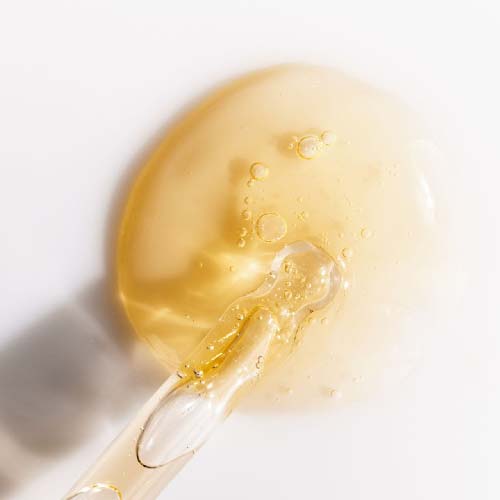
A properly formulated L-Ascorbic Acid serum runs at pH 2.5–3.5. It works. If your skin can’t tolerate that acidity, you need a different active ingredient — not a watered-down version that doesn’t deliver.
Why “Gentler” Often Means “Less Effective”
The skincare industry has convinced you that irritation equals bad formulation. Sometimes it does. But mild, temporary tingling is often your skin adjusting to an active that actually penetrates.
When brands reformulate to eliminate all sensation, they frequently eliminate efficacy along with it.
The Sensory Experience: Potency Without the Burn
15-Second Absorption: What Well-Formulated Vitamin C Actually Feels Like
Here’s what you should feel when you apply a legitimate L-Ascorbic Acid serum: a slight tingle — nothing painful — followed by rapid absorption. Within 15 seconds, the serum should disappear into your skin.
No tacky residue. No slick film. Just skin that feels like it just drank a glass of cold water.
That immediate smoothness signals proper formulation. L-Ascorbic Acid combined with low-molecular-weight hyaluronic acid and a well-designed solvent system delivers deep penetration without surface buildup.
No Pilling, No Stickiness — The Role of Smart Solvents
If your serum pills under makeup or leaves skin sticky all day, the formulator chose cheap humectants or didn’t balance solvent ratios.
A quality serum uses propanediol or glycerin in precise percentages to carry actives into skin — not create a barrier on top of it. This matters if you wear makeup. This matters if you layer products. This matters if you don’t want to feel like you’re wearing a mask.
How Texture Signals Formula Quality (Not Just Luxury)
Texture is diagnostic — not decorative.
- A serum that absorbs in seconds tells you the molecular weights are right.
- A brief tingle that then calms tells you the pH is correctly buffered.
- No oxidation after two weeks tells you the antioxidant system and packaging are properly designed.
If you know what to feel for, the serum evaluates itself.
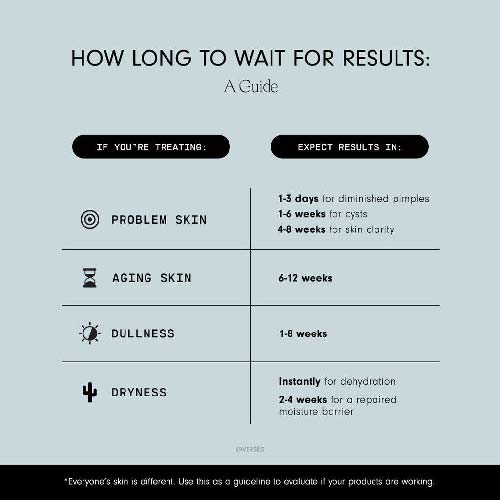
The 60-Day Results Timeline: What Changes and When
Let’s reset expectations now: vitamin C is not Botox. You will not wake up looking 10 years younger after one application. But you will see progressive, cumulative changes that build on each other.
Day 3 — Instant Brightness & Skin Energy
Within three days, your skin looks more awake. There’s a subtle radiance — the kind that makes people ask if you just came back from vacation.
This isn’t collagen yet. It’s surface-level antioxidant activity and improved cellular turnover creating a fresher skin surface.
Day 14 — Visible Tone Clarity & Early Dark Spot Fading
Hyperpigmentation starts to fade. Not dramatically, but noticeably. Post-acne marks lighten. Sun damage softens. Your complexion looks more even.
This is tyrosinase inhibition at work — L-Ascorbic Acid interrupting the melanin production pathway at the source.
Week 8 — Collagen Support, Firmness & Glow Stability
Real, structural collagen that improves skin firmness and resilience takes time. At eight weeks, you’ll see lasting improvements: skin that bounces back faster, fine lines that soften, and a glow that doesn’t disappear by noon.
This is the long game. This is why consistency matters.
Stability, Packaging & Freshness: The Hidden Deal-Breakers
Why Air, Light & Heat Destroy Vitamin C
L-Ascorbic Acid oxidizes when exposed to air, light, or heat. When it oxidizes, it turns yellow, then orange, then brown — and it stops working.
Worse, oxidized vitamin C can generate free radicals instead of neutralizing them. A poorly packaged L-Ascorbic Acid serum is worse than no serum at all.
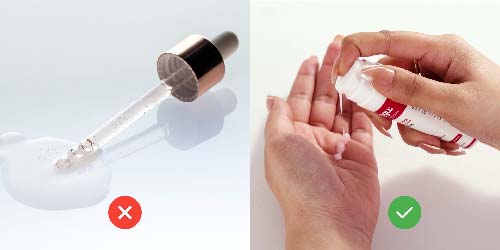
Why Dropper Bottles Are a Red Flag
Every time you open a dropper bottle, you expose the entire product to oxygen. Over weeks, this degrades potency.
Airless pump bottles are the gold standard — they minimize oxidation with each use. If a brand is selling L-Ascorbic Acid in a clear glass dropper bottle, they either don’t understand the chemistry or they don’t care.
How to Tell If Your Serum Has Oxidized
Fresh L-Ascorbic Acid is clear to very pale yellow. If your serum is dark yellow, orange, or brown — throw it out. It’s oxidized. It won’t work. And using it may cause more irritation than benefit.
Who Should (and Shouldn’t) Use L-Ascorbic Acid
Ideal Skin Types & Concerns
L-Ascorbic Acid works best for normal to oily skin dealing with hyperpigmentation, dullness, early signs of aging, or sun damage. It’s also exceptional for anyone in polluted urban environments who needs serious antioxidant protection.
How Sensitive Skin Can Still Use 15% Safely
Sensitive skin can tolerate 15% L-Ascorbic Acid — but it requires building tolerance.
Start every third day for two weeks. Then every other day. Then daily. Your skin will adapt. Pair it with a barrier-repair moisturizer and avoid combining it with strong exfoliants in the same routine.
When to Choose Alternatives Instead
If you have active rosacea, eczema, or severely compromised barrier function, L-Ascorbic Acid may be too aggressive. Start with gentler antioxidants — niacinamide or vitamin E — repair your barrier, then revisit vitamin C.
L-Ascorbic Acid vs. Common Derivatives: The Breakdown
| Factor | L-Ascorbic Acid (15%) | Common Derivatives |
|---|---|---|
| Cost | Higher | Lower |
| Efficacy | Clinically proven | Conversion dependent |
| Research Depth | Extensive (40+ years) | Limited |
| Speed of Results | Fast (weeks) | Slow or inconsistent |
| Stability Needs | High — airless packaging required | Moderate |
| Skin Penetration | Direct (pH 2.5–3.5) | Requires enzymatic conversion |
The Bottom Line
Skincare should be about what works, not what’s easy to manufacture or market. L-Ascorbic Acid at 15% is expensive, finicky, and requires real formulation expertise.
But it’s also the only form with decades of research proving it delivers visible, lasting results.
Stop settling for derivatives. Stop believing the “gentle equals better” myth. And stop expecting overnight miracles from a biological process that takes weeks.
Real skincare is patient. Real skincare is science. And real vitamin C is L-Ascorbic Acid.
Ready to experience the difference pure L-Ascorbic Acid makes? Explore Luminelle’s Radiance Renewal Vitamin C Serum — formulated at the clinical gold standard of 15%.
[SHOP NOW]
Why This Works: The Conversion Mechanics Behind the Content
Psychological Triggers Applied
| Trigger | How It’s Used |
|---|---|
| Pattern Interrupt | “Most vitamin C serums are a scam” stops the scroll and creates cognitive dissonance that demands resolution. By positioning the brand as truth-teller, trust is built before any product mention |
| Reframing Past Failure | “They never actually used vitamin C” shifts the reader’s frustration from self-blame to industry failure. The product becomes the correct solution they haven’t had access to yet |
| Empowerment Through Education | Teaching readers to evaluate any product independently — via pH, absorption speed, oxidation color, packaging — builds loyalty by making the brand an ongoing resource |
| Diagnostic Tension | “How does your serum feel after 15 seconds?” gives readers a way to audit their current product in real time. Discovery of a problem creates urgency without manufactured pressure |
| Honest Expectation Setting | “Vitamin C is not Botox” signals scientific integrity. Brands that acknowledge limitations are trusted more than those that promise everything |
Conversion Principles Applied
- Education-first sequencing: The brand is never introduced until the reader fully understands what the problem is, why it exists, and what the correct solution looks like. By the time Luminelle appears, it’s the logical conclusion — not a pitch.
- Formulator’s voice as differentiator: The tone is authoritative and slightly impatient with industry nonsense. This isn’t a beauty influencer listicle. It’s an insider exposing shortcuts. That voice builds credibility no claim can replicate.
- Comparison table as decision accelerator: The L-Ascorbic Acid vs. derivatives table compresses a complex argument into a single visual that reinforces every point made in the post.
- Timeline specificity as trust signal: Day 3, Day 14, Week 8 milestones set realistic expectations. Readers who know what to look for are more likely to reach Week 8 — and far less likely to return the product before it has time to work.
- Packaging as quality heuristic: Teaching readers that dropper bottles signal poor formulation understanding creates a simple, memorable audit tool. Every time a reader evaluates a competitor’s packaging, they think of this brand.
SEO Architecture
| Element | Detail |
|---|---|
| Primary Keyword | “L-Ascorbic Acid vitamin C serum” — 7 natural occurrences |
| Secondary Keywords | “15% vitamin C,” “vitamin C derivatives,” “SAP vitamin C,” “MAP vitamin C,” “ascorbyl glucoside,” “vitamin C oxidation,” “vitamin C pH” |
| Featured Snippet Targets | “What is the difference between L-Ascorbic Acid and vitamin C derivatives?”, “What pH should vitamin C serum be?”, “How can you tell if vitamin C serum is oxidized?”, “What percentage of vitamin C is most effective?” |
| Internal Link Targets | Product page, “Layering Vitamin C with Retinol” guide, Skincare Ingredients Quiz |
| External Authority Links | L-Ascorbic Acid clinical studies, pH penetration research, collagen synthesis timelines |
Conversion Path
- Problem identification — Most vitamin C doesn’t work and here’s the chemical reason why
- Scientific education — Why derivatives fail and what L-Ascorbic Acid actually does
- Gold standard explanation — Why 15% at the correct pH is the benchmark
- Practical tools — How to evaluate any vitamin C product independently
- Realistic expectations — The 60-day milestone timeline
- Natural product introduction — Luminelle as the logical conclusion of everything the post taught
- Low-friction CTA — Shop link after trust is fully built
Key Takeaways
- Industry truth-telling is a positioning strategy. A brand willing to say “most vitamin C serums are a scam” earns more credibility in one sentence than a standard features blog earns in 1,800 words.
- Empowering readers to audit competitors builds stronger loyalty than product promotion. Readers who learn to spot derivative-heavy formulations will remember where they learned it — and keep coming back.
- A formulator’s voice is a differentiator, not just a tone choice. Authoritative, slightly impatient, science-first copy sounds completely different from standard beauty marketing — and stands out in a crowded feed for exactly that reason.
- Metaphors make chemistry stick. The Monopoly money analogy for enzymatic conversion is more memorable than any clinical explanation, and just as accurate.
- Texture and packaging are quality signals, not just UX details. Teaching readers what absorption speed and bottle design reveal about formulation turns everyday observations into brand-reinforcing moments.
- Timeline honesty is a conversion tool. Brands that tell readers “you won’t see collagen results for eight weeks” reduce refunds, increase review satisfaction, and build the kind of credibility that survives the competitive beauty market.
FAQ
Why does the post open with such a provocative claim?
“Most vitamin C serums are a scam” is a pattern interrupt — it stops the scroll by creating cognitive dissonance the reader needs to resolve. But it’s not clickbait; it’s immediately justified by chemistry. The boldness earns attention; the accuracy earns trust.
Doesn’t exposing industry shortcuts alienate potential brand partners or retailers?
This content is designed for direct-to-consumer authority building, not trade relationships. For a D2C brand competing on quality and transparency, this kind of positioning is a competitive advantage — it attracts exactly the ingredient-conscious buyer who converts at higher lifetime value.
How does the formulator’s voice work if the content is written by a copywriter, not a formulator?
The voice is a strategic persona — the brand’s POV, not a specific individual’s biography. The post is written as someone with formulation expertise, which requires deep research into the chemistry but isn’t dependent on the writer’s credentials.
Can this approach work for other skincare actives beyond vitamin C?
Yes. The architecture transfers to any active where there’s a common consumer misconception, an industry shortcut, and a “gold standard” formulation the brand has invested in: retinol, niacinamide, hyaluronic acid, AHAs. The framework is: expose the shortcut → explain the science → position the correct solution.
Why teach readers to evaluate competitors’ products? Doesn’t that risk them choosing another brand?
It risks exactly the opposite. Readers who learn to spot low-quality formulations become loyal to the brand that educated them. They’ll check competitors’ pH ranges and packaging and conclude — without being told — that those brands don’t meet the standard they now understand.
Building Beauty Content That Earns Authority Before It Asks for the Sale
This case study is for beauty and skincare brands that need blog content doing two things simultaneously: ranking for high-intent keywords and building trust with educated, skeptical buyers.
If your content explains ingredients but feels interchangeable with competitors — or ranks but doesn’t influence product consideration — this is the strategic approach that changes that.
Looking for Beauty Blog Content That Actually Builds Trust?
If you’re a D2C skincare or beauty brand struggling with blog content that gets traffic but doesn’t build credibility
this is the kind of strategy that fixes that.
Education-first, conversion-aware content that turns ingredient knowledge into buying confidence.