
Health Supplement Blog Content Case Study
How Strategic Health Supplement Blog Content Built Authority and Guided Readers Toward Product Consideration
Building trust through science-backed Health Supplement Blog Content before introducing the product.
Scope:
Health Supplement Blog Content Strategy & SEO Blog Writing
Industry:
Health Supplements /
Nutraceuticals / Preventative Wellness
What Was Delivered:
Education-First Health Supplement Blog Content (SEO Long-Form Blog Post)
Strategic Overview
A science-backed Health Supplement Blog Content strategy built authority first—then guided readers toward product consideration without hard selling.
The goal: build authority through clinical depth—then guide readers to product consideration without hard selling.
The goal wasn’t traffic—it was trust.
The Problem: Why Most Supplement Blogs Don’t Work
Supplement content typically fails in one of two ways:
- It oversimplifies the science — losing credibility with educated, skeptical readers who want to understand what’s actually happening in their body.
- It drowns in jargon — losing everyone else before the first product mention.
Both approaches trigger the same reaction: “They’re just trying to sell me something.”
The brief required a third path: clinical depth, written in plain language, sequenced to educate before it ever sells.
Education removes resistance before selling begins.
The Strategy: Seven Pillars Behind the Content
Authority Through Scientific Transparency
Rather than vague “supports eye health” language, the post explains exact biological mechanisms: meibomian gland dysfunction, accommodative spasm, lipid peroxidation.
Problem Amplification Before Solution
The first 60% of the post focuses exclusively on symptoms and biological mechanisms—before any product mention.
This prevents the “I’m being sold to” defensive reaction and positions the brand as educator-first. Readers who understand the problem are far more receptive when the solution finally arrives.
Bioavailability as the Key Differentiator
Most supplement content focuses on ingredients. This post pivots to absorption—explaining why lutein particle size, lipid matrices, and MCT delivery matter as much as the dose itself.
This creates a logical reason why Occumate works when other supplements haven’t—without attacking competitors directly.
Empowerment, Not Fear
The post acknowledges serious risks (AMD, cellular damage) but maintains an empowering tone throughout: “Your eyes have remarkable capacity when given proper tools.”
Urgency is balanced with optimism—motivating action without triggering anxiety or helplessness.
SEO Integration
The primary keyword “digital eye strain symptoms” appears 8 times naturally across headings and body text. Long-tail variations (“persistent eye dryness,” “blurred vision after screen use”) are woven in to match actual searcher intent.
Readability is never sacrificed for ranking.
Indian Context Specificity
References to PM2.5 pollution, Indian dietary patterns (turmeric, spinach, fenugreek), and “urban Indian metabolic demands” make this locally relevant—not a repurposed Western supplement blog.
Habits + Supplements, Not Supplements Alone
The post explicitly pairs nutrition with behavioral practices: the 20-20-20 rule, conscious blinking, screen positioning.
This holistic framing makes the brand feel credible and responsible, not pill-dependent.
The Execution: Full Blog Post
Digital Eye Strain Symptoms You Should Never Ignore: A Science-Backed Guide
Target Audience: Urban Indian professionals (28–45),
10+ hours daily screen time, experiencing chronic eye fatigue
Conversion Goal: Drive product awareness and position Occumate as the bioavailable solution for screen-first lifestyles
The average Indian professional spends 10–12 hours daily staring at screens. What starts as mild discomfort often escalates into chronic ocular fatigue—the gap between “tired eyes” and cellular damage is narrower than you think.
As a Senior Wellness Formulator specializing in Derma-Science and Nutraceuticals, I bridge laboratory research with real-world outcomes. The issue isn’t just blue light—it’s oxidative stress, inflammatory cascades, and tear film instability at the cellular level.
In simple terms: Screen time creates microscopic damage faster than your eyes can repair it.
This guide explains five digital eye strain symptoms signaling deeper stress—and how targeted nutrition may help support recovery before digital eye strain symptoms become harder to reverse.
Why Digital Eye Strain Is More Than “Tired Eyes”
Your normal blink rate is 15–20 times per minute. On screens? It drops to 5–7 blinks—a 60% reduction. Each blink spreads your tear film, protecting your cornea. Fewer blinks mean tear evaporation and micro-abrasions, which can contribute to tear film instability and dry eye disease over time.
Simultaneously, high-energy visible (HEV) blue light from LED screens penetrates deep into your retina, reaching the photoreceptor layer and generating reactive oxygen species (ROS) that may trigger cellular stress.
What this means:
- Eyes dry out 60% faster during screen time
- Blue light reaches deeper into the retina than UV
- Cellular stress compounds hourly
For urban Indians, PM2.5 pollution increases inflammation, diets often lack critical carotenoids, and commutes add 2–3 hours of screen exposure on top of the workday.
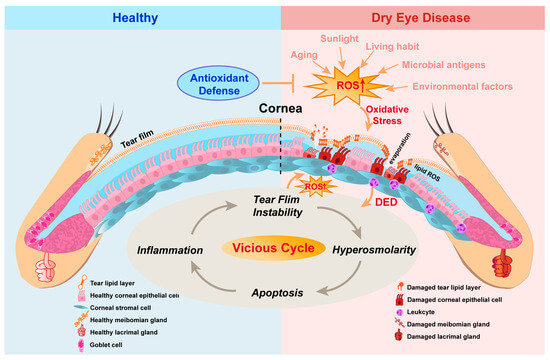
The reality: Chronic, low-grade inflammation may accelerate vision changes.
5 Digital Eye Strain Symptoms You Should Never Ignore
Each symptom reflects a specific breakdown in your eye’s defense mechanisms. Early recognition can make the difference between reversible fatigue and longer-term cellular changes.

1. Persistent Eye Dryness & Burning Sensation
- What you feel: Gritty, sandy sensation that persists even after blinking.
- What may be happening: Your meibomian glands aren’t secreting enough lipid to stabilize the tear film, causing rapid evaporation and exposing the corneal epithelium to inflammation. This can progress to MGD (meibomian gland dysfunction)—associated with persistent dry eye.
- Why it matters: MGD doesn’t reverse on its own.
2. Blurred or Fluctuating Vision After Screen Use
- What you feel: Vision fluctuates, especially when shifting from screen to distance.
- What may be happening: Prolonged near-focus forces ciliary muscles into sustained contraction, creating accommodative spasm. Combined with an unstable tear film, vision “smears.”
- In simple terms: Your eye muscles are stuck in “near mode.”
3. Frequent Headaches Around the Temples or Eyes
- What you feel: A dull ache behind the eyes or across the forehead.
- What may be happening: Convergence insufficiency plus muscle fatigue. Six eye muscles per eye work overtime maintaining screen focus. When fatigued, they may trigger trigeminal nerve irritation.
- Key distinction: This is neuromuscular strain, not tension headache.
4. Sensitivity to Light and Glare
- What you feel: Bright lights feel harsh; constant squinting becomes default.
- What may be happening: Excessive blue light may deplete rhodopsin faster than regeneration, leaving photoreceptors hypersensitive. Uveal tract inflammation may amplify this—a condition called photophobia.
- This is where most people get it wrong: They blame the lights, not cellular depletion.
5. Eye Fatigue That Doesn’t Resolve with Rest
- What you feel: Even after sleep, eyes feel heavy and strained.
- What may be happening: Chronic ocular fatigue suggests damage may be outpacing repair. The RPE (retinal pigment epithelium)—which clears metabolic waste—may be overwhelmed.
- Bottom line: If rest doesn’t help, the issue is biochemical, not behavioral.
The Science Behind Retinal Inflammation
Blue light (400–490 nm) excites lipofuscin in aging RPE cells, generating singlet oxygen and ROS—key drivers of blue light–induced retinal oxidative stress—that attack photoreceptor membranes, potentially causing lipid peroxidation, cellular damage, and inflammatory cytokine release.
In plain language: Blue light creates cellular “rust” faster than eyes can clean it up.
Your macula consumes oxygen at brain-comparable rates. Blue light overload may impair choroidal blood flow. Studies show screen exposure is associated with decreased choroidal thickness—an early AMD (age-related macular degeneration) risk marker.
Reduced blinking increases tear osmolarity. Hyperosmolar tears activate inflammation, releasing MMPs (matrix metalloproteinases) that may degrade the corneal surface. The cycle perpetuates—inflammation worsens meibomian function, which destabilizes tear film further.
The Science of Astaxanthin & Lutein
Understanding the biology is one thing. The real challenge? Delivering nutrients the body can actually absorb—and this is where most supplements fail.
How Astaxanthin May Cross the Blood-Retinal Barrier
Astaxanthin from microalgae can cross both the blood-brain and blood-retinal barriers, potentially reaching protective tissues directly. It embeds into photoreceptor membranes, neutralizing singlet oxygen significantly more effectively than vitamin E.
Trials suggest 6–12 mg daily may help reduce accommodative microfluctuations and support visual processing speed.
Lutein’s Role in Macular Protection
Lutein and zeaxanthin form macular pigment—a natural blue light filter. Higher density is associated with reduced glare, faster photostress recovery, and lower AMD risk.
The catch: Lutein needs dietary fat for absorption. Research shows bioavailability increases significantly with MCTs (medium-chain triglycerides).
A 2020 RCT showed astaxanthin + lutein was associated with:
- 46% decreased eye fatigue
- 34% improved tear stability
- Enhanced contrast sensitivity after 12 weeks
Why Bioavailability Changes Outcomes
Nutrient form matters as much as dose. Most commercial supplements use poorly micronized lutein—too large for efficient absorption. Algae-derived astaxanthin comes in a bioavailable lipid matrix. Advanced formulations use liposomal delivery, encapsulating carotenoids in lipid bubbles that fuse with intestinal cells.
The difference:
- Standard supplements: 8–12 weeks for noticeable effects
- High-bioavailability formulations: 4–6 weeks for noticeable effects
How Occumate Addresses Absorption
At Aligns Health, Occumate was formulated to address what most supplements overlook: bioavailability, not just ingredients.
The formulation includes:
- Algae-derived astaxanthin in a patented lipid matrix
- Micronized lutein/zeaxanthin with verified particle size
- Moringa extract standardized for quercetin and kaempferol
- MCT oil base for pre-emulsified delivery
Studies suggest improvements may be observed within 4–6 weeks when nutrients are properly absorbed.
Preventive Eye Care Habits
Supplements work best alongside consistent daily habits:
- 20-20-20 rule: Every 20 minutes, take a 20-second break to look at something 20 feet away
- Conscious blinking: 10 deliberate blinks every hour
- Screen positioning: 20–26 inches away, below eye level
- Blue-light filters: Enabled after 6 PM
- Humidity control: Maintain 50–60% relative humidity
Indian diets offer great carotenoid sources—turmeric, spinach, fenugreek—but modern processing creates inconsistent therapeutic doses. Supplementation may help bridge that gap.
When to Act
Chronic inflammation doesn’t announce itself. Changes occur gradually: macular pigment may decline, glands may atrophy, RPE may accumulate damage markers. Research associates these with 30–40% higher AMD risk over a decade.
A practical protocol:
- If you have 2+ symptoms persisting beyond 2 weeks, consult an ophthalmologist
- Take bioavailable nutrients with your fattiest meal
- Implement habits consistently—even partial adherence may reduce strain significantly
FAQ: Digital Eye Strain
Is digital eye strain permanent?
Typically reversible with proper intervention. Unaddressed chronic inflammation may contribute to longer-term changes.
How long does recovery take?
Many report improvements within 4–6 weeks with consistent habits and targeted nutrition.
Can supplements really help?
Research suggests bioavailable astaxanthin and lutein may support macular health and reduce fatigue symptoms.
How much screen time is safe?
Beyond 6–8 hours daily, symptoms become significantly more common. The 20-20-20 rule helps mitigate risk at any level.
Do blue-light glasses work?
They may reduce exposure but don’t address biochemical stress. Combine with antioxidant support for comprehensive protection.
The Bottom Line
Digital eye strain symptoms aren’t just discomfort—they’re early warnings of cellular changes that may accelerate with unprotected screen time.
Your eyes have remarkable capacity when given proper tools. Astaxanthin may neutralize ROS. Lutein may rebuild macular pigment. Moringa may support inflammatory balance. When bioavailable, results are measurable.
If you’re recognizing digital eye strain symptoms, you’re ahead. Most people don’t connect screen habits to eye health until changes become harder to reverse.
Start today. Your future vision may thank you.
Why This Works: The Strategic Logic Behind the Content
Psychological Triggers Applied
| Trigger | How It’s Used |
|---|---|
| Validation Before Pitch | The first 60% of the post explains symptoms and mechanisms—before any product mention. Skepticism is disarmed before it forms |
| Specificity as Credibility | Meibomian gland dysfunction, accommodative spasm, lipid peroxidation—clinical terminology signals genuine expertise, not marketing polish |
| Reframing Past Failures | The bioavailability section explains why previous supplements didn’t work—without attacking competitors. Occumate becomes the missing variable |
| Urgency + Optimism | AMD risk and cellular damage create urgency. “Your eyes have remarkable capacity when given proper tools” prevents helplessness |
| Indian Identity Relevance | PM2.5 references, Indian dietary patterns, and “urban Indian metabolic demands” signal that this content was written for this reader, not repurposed for them |
Conversion Principles Applied
- Education-First Sequencing: The post follows a deliberate 60/40 split—60% education, 40% solution. Readers arrive at the product mention already convinced of the problem.
- Specificity as Trust: Exact dosages, named mechanisms, and referenced RCT data signal research depth without requiring the reader to verify independently.
- Bioavailability as Differentiator: Shifting from ingredients to absorption creates a unique positioning angle that most supplement competitors haven’t claimed.
- Habit + Supplement Pairing: Presenting the 20-20-20 rule alongside Occumate makes the brand feel responsible and credible—not dependent on a purchase to be useful.
Content Structure Logic
- H2/H3 hierarchy creates a scannable roadmap for both readers and search engines.
- Short paragraphs (2–3 sentences) reduce cognitive load and maintain scroll momentum throughout a 1,400-word post.
- Bold takeaways at the end of each symptom section give skimmers the critical insight without requiring a full read.
- FAQ section targets featured snippet opportunities for high-intent long-tail queries.
SEO Architecture
| Element | Detail |
|---|---|
| Primary Keyword | “digital eye strain symptoms” — 8 natural occurrences |
| Secondary Keywords | “eye fatigue,” “blue light damage,” “macular protection,” “astaxanthin benefits,” “lutein bioavailability” |
| Internal Link Targets | Product page, related blog (“Blue Light and Sleep”), Eye Health Assessment Quiz |
| External Authority Links | Astaxanthin clinical studies, lutein/zeaxanthin RCT data, AMD risk factor research |
| Featured Snippet Targets | FAQ section formatted for direct-answer extraction |
Conversion Path
- Symptom recognition — empathy and validation
- Scientific education — authority building
- Bioavailability explanation — competitive differentiation
- Product introduction — natural, low-resistance
- CTA with product link — low-friction next step
Key Takeaways
- Education-first sequencing is more persuasive than selling first. Readers who understand the problem convert more readily than readers who feel pitched to.
- Clinical specificity builds trust that marketing language cannot. Named mechanisms and exact dosages signal expertise—not just enthusiasm.
- Bioavailability is an underused differentiator. Pivoting from “what’s in the supplement” to “how much the body actually absorbs” creates a positioning angle competitors rarely occupy.
- Locally relevant content outperforms generic health content. Indian-specific references (pollution, diet, urban lifestyle) make this feel written for this reader—not adapted for them.
- SEO and conversion aren’t in conflict. Natural keyword integration and reader-first structure serve both goals simultaneously.
- Habit pairing increases brand credibility. Brands that recommend behavioral practices alongside their product feel trustworthy rather than transactional.
Producing Supplement Content That Earns Trust Before It Sells?
This case study is for D2C health brands and nutraceutical companies that need long-form content doing two things at once: building organic search visibility and converting educated, skeptical readers.
Looking for Similar Copy for Your Brand?
If your blog content is informational but not positioning your brand as a credible authority—or if it’s SEO-targeted but not driving any product consideration—this is the kind of strategic content work that bridges both.
Izwiq Digital works with e-commerce and D2C brands on content that earns the click and closes the sale.